

3-second answer: If frost or ice keeps building up inside your freezer, the most common reason is warm, humid air getting in — usually through a worn or torn door gasket, or a door that isn’t sealing because it’s left ajar or overpacked. The other big cause is a defrost-system failure: when the defrost heater, thermostat, timer, or control board stops cycling, frost piles up on the back evaporator panel until it chokes airflow. A blocked defrost drain can also leave a sheet of ice on the freezer floor. Most of the air-leak fixes are safe DIY — check and clean the gasket, level the door, do a full manual defrost, clear the drain. Defrost components and anything in the sealed system are a job for a technician. This is the freezer-specific companion to our broader guide on a refrigerator not cooling properly.

In this guide
The most common causes of freezer frost buildup
A little light frost in a freezer is normal — every time the door opens, some humid room air gets in and freezes onto the cold surfaces. The problem is when ice keeps building up: thick frost on the walls, a sheet of ice on the floor, or a wall of white covering the back panel. That tells you either too much humid air is getting in, or the defrost system that’s supposed to melt frost away has stopped doing its job. Across the GTA, York Region, and Simcoe County, here are the causes we see most often, in roughly the order you should rule them out. The same causes turn up on every brand we service, True Residential freezers included.

- Worn / torn door gasket or a door left ajar — most common; lets warm, humid air in
- Frequent door opening or putting hot food in — adds moisture that freezes out
- Defrost-system failure — heater, thermostat, timer, or control; frost on the back evaporator panel
- Blocked defrost drain — ice on the freezer floor
- Damper or air-flow issue — uneven frost, less common
1. Worn or torn door gasket, or a door left ajar (most common)
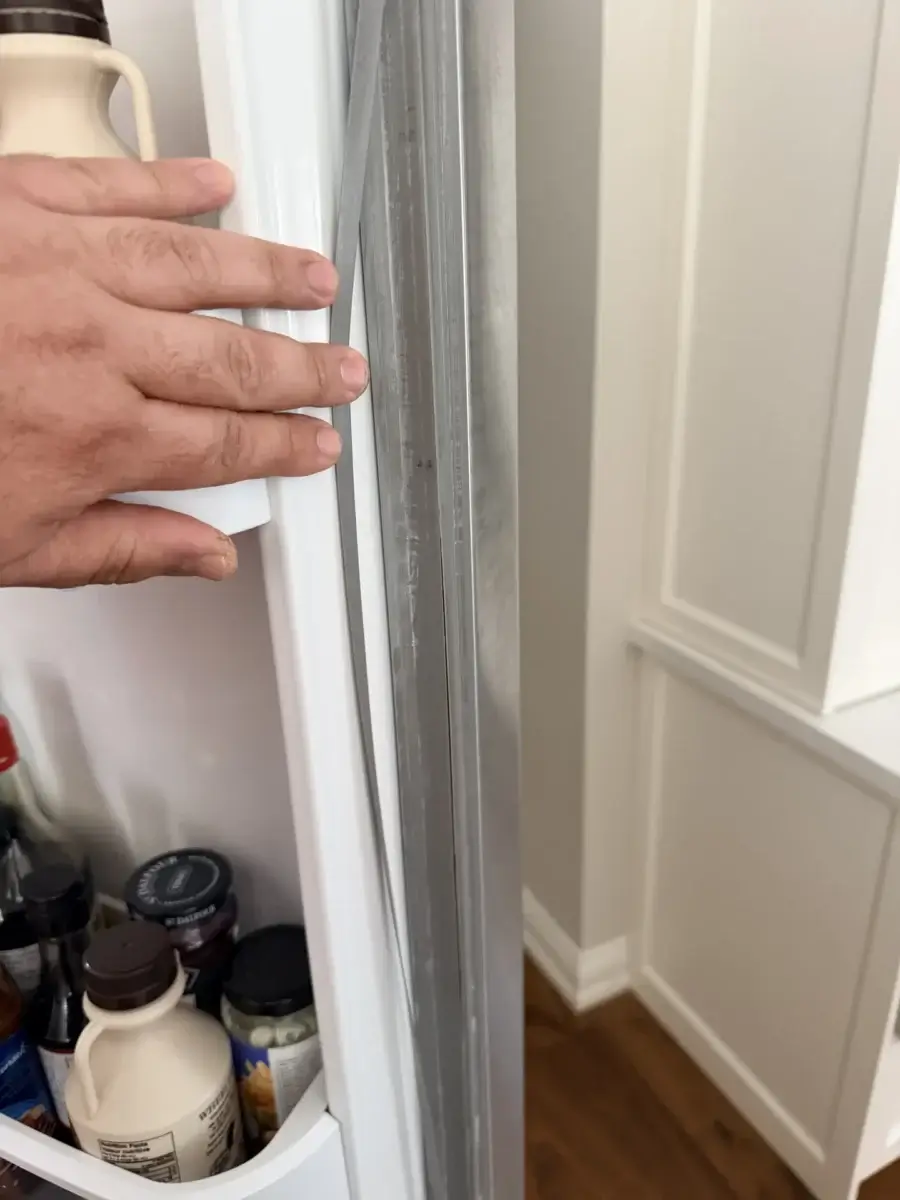
The single most common reason a freezer ices up is simply that warm, humid air is getting inside — and the usual culprit is the door seal. The gasket is the flexible rubber strip around the door that’s supposed to press tight against the cabinet. Over years of opening and closing it hardens, cracks, tears, or fills with grime, and it stops sealing. Every gap pulls in room air; the moisture in that air freezes onto the coldest surfaces and the frost keeps growing.
A door that won’t fully close has the same effect even with a perfect gasket — an over-stuffed drawer holding the door open a crack, a fridge that isn’t level so the door swings open, or items wedged against the seal will all let humid air pour in continuously.
How to spot it: Heavy frost concentrated near the door or one corner, the door feeling loose or easy to nudge open, and visible cracks or flat spots in the rubber. The classic test: close the door on a slip of paper or a dollar bill — if it slides out with no drag, the seal at that spot is weak.
2. Frequent door opening or loading in hot food
Even with a perfect gasket, every door opening swaps a little cold dry air for warm humid air, and that moisture has to go somewhere — it freezes onto the walls and shelves. A freezer that gets opened constantly, that’s in a hot or humid spot (a garage in summer, a steamy laundry room), or that gets loaded with warm or uncovered food will frost over faster than one that’s rarely opened. Uncovered liquids and unwrapped food give off moisture for days after they go in.
How to spot it: Light, even frost that builds gradually rather than a sudden thick wall of ice; it gets noticeably worse in summer or after a big batch of warm leftovers went in. This is a habit-and-environment problem, not a broken part — the fixes are in the prevention section below.
3. Defrost-system failure (frost on the back evaporator panel)
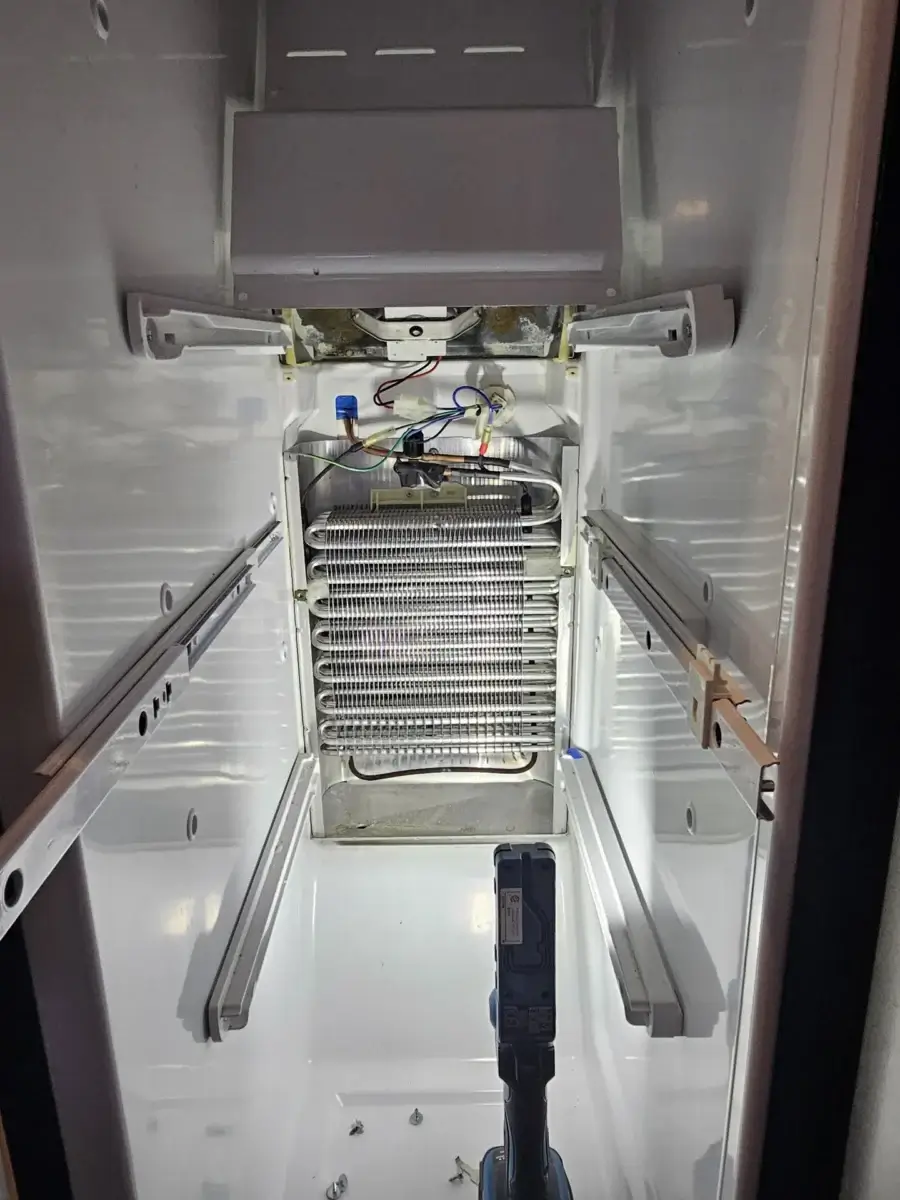
Frost-free freezers don’t magically stay clear — they run a defrost cycle several times a day. Behind the back interior panel sits the evaporator coil, where frost naturally forms as the freezer cools. On a schedule, a defrost heater warms that coil just enough to melt the frost, a defrost thermostat tells it when to stop, and a defrost timer or control board decides when the cycle runs. If any one of those fails, the heater never melts the frost, and it builds on the evaporator until it forms a solid block of ice behind the panel — which then blocks airflow and makes the whole freezer (and often the fridge above it) cool poorly.
How to spot it: Thick frost or a sheet of ice specifically on or behind the rear interior panel, often with the fridge section warming up too because the airflow is choked. A telltale sign: you fully manual-defrost the freezer and it works fine for a week or two, then frosts over again in the same spot — that pattern points squarely at the defrost system rather than the door.
4. Blocked defrost drain (ice on the freezer floor)
When the defrost cycle melts frost off the evaporator, the meltwater is supposed to run down a small drain channel and into a pan near the compressor, where it evaporates. That drain can clog with food debris or freeze shut. When it does, the meltwater has nowhere to go — it pools at the bottom of the freezer and refreezes, leaving a growing sheet of ice on the floor (and sometimes water leaking into the fridge compartment below, or out onto your kitchen floor).
How to spot it: Ice forming specifically on the freezer floor, water pooling under the bottom drawers, or a leak appearing in the fridge section or on the floor. If your bigger problem is water rather than frost, see our dedicated guide on a refrigerator leaking water. Clearing a frozen drain is often a doable DIY job — it’s in the diagnostic steps below.
5. Damper or airflow issue (less common)
Most fridge-freezers route cold air from the freezer’s evaporator up into the fridge section through an air damper. If that damper sticks open, or vents inside the freezer get blocked by packed-in food, airflow becomes uneven — some areas frost heavily while others stay warmer. This is a less common cause and harder to confirm without opening the unit, but it’s worth keeping in mind if the frost pattern is lopsided and the gasket and defrost system both check out.
How to spot it: Frost concentrated around one vent or one zone of the freezer while the rest stays relatively clear, often paired with a fridge section that’s too warm or too cold. Confirming a damper fault usually needs a technician.
Frost building up around the ice compartment is also a common reason an ice maker stops working — if your ice production has stalled alongside the frost, that guide covers the ice-circuit side of the problem.
Safety first. Always unplug the freezer before you touch the back interior panel, the defrost components, or the drain. Never use a knife, ice pick, or other sharp tool to chip ice off the walls or coil — one slip can puncture the evaporator and the refrigerant lines, which turns a simple frost problem into a sealed-system repair. Let ice melt, or speed it with a bowl of hot water and a towel.
Frost-free vs manual-defrost freezers — which do you have?
Knowing your freezer type changes what “normal” frost looks like. A frost-free freezer (most modern fridge-freezers and many uprights) has a defrost system that melts frost automatically several times a day, so the interior should stay essentially frost-free. If a frost-free model is icing up, something is wrong — either too much humid air is getting in, or the defrost system has failed.
A manual-defrost freezer (most chest freezers and some basic uprights) has no defrost heater at all — it’s designed to slowly accumulate frost, and you’re expected to empty and defrost it by hand once or twice a year. On these, a layer of frost building up over months isn’t a fault; it’s normal operation. The fix is a routine manual defrost, not a repair.
So the first question is: is the frost abnormal for your type? Steady frost in a chest freezer over half a year is expected. Frost returning within days or weeks in a frost-free model — especially on the back panel — points to the door seal or the defrost system.
5-step DIY diagnostic
You don’t need any special tools for the safe checks — just a flashlight, a slip of paper, some towels, and a bowl of hot water. Work in this order before deciding whether you can fix it yourself or need a tech:
- Check the door and gasket. Open and close the door — does it pull shut and seal on its own, or does it hang loose? Run your finger around the rubber gasket feeling for cracks, hardened spots, or tears, and wipe it clean of any grime or ice. Do the paper test: close the door on a slip of paper and tug — if it slides free with no resistance anywhere, the seal is weak there. Make sure no drawer or item is holding the door open a crack, and that the unit sits level so the door swings closed.
- Look at where the frost is. Frost near the door or one front corner points to an air leak (gasket / door). A solid sheet of ice on the floor points to a blocked defrost drain. Thick frost on or behind the rear interior panel points to the defrost system. The location tells you which path to follow.
- Do a full manual defrost. Empty the freezer, unplug it, and let all the ice melt completely — leave the door open with towels down to catch the water (a bowl of hot water inside speeds it up). Never chip at ice with a sharp tool. This both resets the situation and tells you a lot: if it stays clear afterward, the cause was an air-leak or habit issue; if frost rebuilds on the back panel within a week or two, the defrost system is the suspect.
- Clear the defrost drain. While it’s defrosted, find the drain hole at the bottom of the freezer compartment (often under the rear panel or at the back of the floor). Flush it gently with warm water; a turkey baster works well. If it was frozen or clogged, clearing it should stop ice re-forming on the floor.
- Plug back in and watch for a week. Restock, close the door fully, and keep an eye on where (and how fast) frost returns. No return, or only slow even frost — you’re likely fine, just manage humidity and door habits. Frost back on the rear panel, ice back on the floor after clearing the drain, or a fridge section that won’t hold temperature — that’s defrost-system or sealed-system territory and the next stop is a technician.
Gasket good, door sealing, drain clear — but frost keeps rebuilding on the back panel after a full defrost? That points to a failed defrost heater, thermostat, timer, or control board — components that need a technician to test and replace. Book a same-day GTA appointment: 647-834-4646 ($89 service call applied to the repair if you go ahead).
How to stop ice building up in the freezer
Once you’ve cleared the current frost, a few habits keep it from coming back — especially on the air-leak and humidity causes that are the most common in the first place:
- Keep the gasket clean and check it. Wipe the door seal with warm soapy water now and then, and replace it if it’s cracked, torn, or no longer passing the paper test — a fresh gasket is one of the most effective frost fixes.
- Close the door fully, every time. Don’t over-pack drawers or shelves to the point the door won’t shut, and make sure nothing is wedged against the seal. Confirm the unit is level so the door swings closed on its own.
- Cover food and let leftovers cool first. Uncovered liquids and warm food release moisture that freezes onto the walls. Cover containers and let hot food reach room temperature before freezing it.
- Open the door less, and not for long. Decide what you want before opening, and close it promptly — especially in a hot, humid garage or laundry room.
- Defrost manual freezers on a schedule. If you have a chest or manual-defrost freezer, empty and defrost it once or twice a year before the frost gets thick — it runs more efficiently with the walls clear.
- Don’t set the freezer colder than it needs to be. An extremely low setting can encourage more frost; the typical recommendation is around -18°C (0°F).
When to call a GTA appliance pro
Call us if any of these apply:
- Frost keeps rebuilding on the rear interior panel within a week or two of a full manual defrost — a classic defrost-system failure (heater, thermostat, timer, or control board)
- You’ve cleared the defrost drain and ice still forms on the freezer floor, or water keeps leaking out
- The freezer ices up and the fridge section won’t hold temperature — the frost is choking airflow, or there’s a deeper cooling fault
- The frost pattern is lopsided around one vent and the gasket and defrost both check out (possible damper or fan issue)
- You suspect a sealed-system problem — never DIY refrigerant or compressor work
- You’re not comfortable removing the rear panel or testing electrical defrost parts
Appliance Forever covers the entire GTA, York Region, and Simcoe County — Vaughan, Markham, Aurora, Newmarket, Bradford, Barrie, Innisfil, Scarborough, North York, Richmond Hill, and beyond. We’re factory-trained on 30+ brands, our $89 service call applies to the repair, and every repair is backed by a 90-day warranty. Book same-day at 647-834-4646 or browse our refrigerator repair services. If your fridge is also struggling to cool, start with our guide on a refrigerator not cooling properly.
FAQ — quick answers
Why is my freezer icing up all of a sudden?
A sudden increase in freezer frost usually means more warm, humid air is getting in, or the defrost system has stopped working. Start with the door: a worn or torn gasket, a door left ajar, or an over-packed drawer holding it open lets humid air pour in, and that moisture freezes onto the walls. If the door and seal are fine but frost keeps building on the back panel, the defrost heater, thermostat, or timer has likely failed and needs a technician.
What causes frost buildup in a frost-free freezer?
A frost-free freezer runs an automatic defrost cycle several times a day, so it shouldn’t ice up. When it does, the two main causes are air leaks (a bad door gasket or a door that doesn’t seal) and a defrost-system failure — a broken defrost heater, thermostat, timer, or control board that stops melting frost off the rear evaporator coil. A blocked defrost drain can also leave ice on the floor.
How do I stop ice building up in my freezer?
Check and clean the door gasket and replace it if it’s cracked or no longer seals, make sure the door closes fully and the unit is level, cover food and let leftovers cool before freezing, and open the door less often. Do a full manual defrost to clear existing ice, and flush the defrost drain so meltwater can escape. If frost rebuilds on the back panel within a couple of weeks, the defrost system needs servicing.
Is it normal for a freezer to have frost?
A little light frost is normal — every door opening lets in some humid air that freezes. On a manual-defrost freezer (most chest freezers), frost slowly building up over months is expected, and you defrost it by hand once or twice a year. On a frost-free model, heavy or fast-returning frost is not normal and points to a door-seal or defrost-system problem.
Can a bad door seal cause freezer frost?
Yes — a worn, torn, or grimy door gasket is the most common cause of freezer frost buildup. Any gap pulls warm, humid room air into the freezer, and that moisture freezes onto the coldest surfaces. Test the seal by closing the door on a slip of paper: if it slides out with no resistance, the gasket is weak there and should be cleaned or replaced.
Should I unplug my freezer to defrost it?
Yes. To defrost a freezer safely, empty it, unplug it, and let the ice melt completely with the door open and towels down to catch the water; a bowl of hot water inside speeds things up. Never chip at the ice with a knife or ice pick — you can puncture the evaporator and refrigerant lines and turn a simple frost problem into a major sealed-system repair.
How much does it cost to fix a freezer that keeps icing up in the GTA?
It depends on the diagnosis. If it’s a door gasket or a blocked drain, it’s at the low end; a defrost heater, thermostat, or control-board replacement is more involved. For typical ranges by repair type, see our refrigerator repair cost guide for the GTA. Our $89 service call covers the on-site diagnosis and is applied to the repair if you go ahead, every job is quoted before any parts work, and repairs are backed by a 90-day warranty. Call 647-834-4646 for a same-day appointment.
Freezer still frosting over after the DIY diagnostic?
Book a same-day appointment across the GTA, York Region, and Simcoe County. Our $89 service call is applied to the repair, the final price depends on the diagnosis, and every repair is backed by a 90-day warranty. Factory-trained on 30+ appliance brands.
Call now: 647-834-4646 | Book your service online
 Rating
We’re professional and very helpful.

Friendly and super fast service. George got my stove and running in no time! Really appreciate their work!

Super friendly and very professional. Fixed my dishwasher in no time!! Highly recommend!!

Excellent service from start to finish. The repair was done quickly and at a good price, and the technician was very professional and respectful. Highly recommend this company!

A long overdue review. I’ve had Appliance Forever take care of both my dishwasher and my range. Each experience was professional, pleasant, and I was very satisfied with the outcome of the work. George is an excellent communicator and keeps you up to date on the status of the appointment, and Zack is very efficient when he is in the homeworking. I highly recommend their service.

Came in initially to assess the issue. Came back to replace damaged element and the service repair call was fast and excellent. Appreciate the friendly and fast service. The service was to replace my JennAir oven element.

Great service, quick and polite.

Solved the issue quickly. Thanks

Excellent service! Appliance Forever fixed my fridge quickly and did an amazing job. The technician was professional, friendly, and efficient. My fridge is working perfectly now. I highly recommend them to anyone needing appliance repairs. Thank you!

Good communication from both Zack and George. Excellent Service!

Fixed my KitchenAid oven very fast. Great guys both Zack and George. If anything breaks in my kitchen I will call them back.

My washer was broken, and they came out really quickly. They worked fast and fixed the problem with no hassle. Great service!

Thank you George for being so professional, timely and efficient while repairing my freezer. Job well done.

Appliance Forever came to fix our Refrigerator. They were knowledgeable, professional and very efficient. Very pleased with their work!

Highly recommend Appliance Forever!