

Reached for ice and found an empty bin — or the same melted lump that’s been there for days? An ice maker that’s stopped working is one of the most common refrigerator calls we get across the GTA, and the encouraging part is that the most frequent causes are things most homeowners can check in under half an hour. This is the complete reference we built from years of GTA fridge service calls: every realistic reason an ice maker stops making ice, ranked by how often we actually find it, a safe DIY checklist, then the brand-specific quirks for Samsung, LG, Frigidaire, and Whirlpool — and a clear line for when the repair is past a homeowner’s tools.
No ice and no time to troubleshoot? Call 647-834-4646 for same-day refrigerator and ice maker repair across Toronto, North York, Markham, Vaughan, Bradford, Barrie, and York Region.
Whether your “ice maker is not working,” your “refrigerator ice maker stopped making ice,” or you searched for your specific brand, the underlying failure modes are the same short list of parts. Work through this guide top to bottom, or jump to the section you need.
TL;DR — Ice maker not working, the short version: Check the easy stuff first, in this order: the ice maker is actually turned on (the wire arm is down, or the power switch/display is set to ice), the freezer is cold enough (it needs to hold around 0°F / -18°C), nothing is jamming the bin or ejector, and the water supply is on and the filter isn’t overdue. The next layer — a frozen fill tube, a kinked or frozen water line, or low water pressure — is still mostly homeowner-territory with a thaw or a quick line check. If the water inlet valve, the ice maker module/motor, or the sealed cooling system has failed, that’s a technician repair. Most ice maker repairs land in a typical range anchored to our $89 service call, applied to the repair if you go ahead — the final price depends on the diagnosis.
Table of contents — jump to your problem
- Why isn’t my ice maker working? (how it actually makes ice)
- The complete causes, in likelihood order
- The safe DIY checklist (8 steps)
- Brand-specific guides (Samsung, LG, Frigidaire, Whirlpool)
- What ice maker repair costs
- When to call a pro
- FAQ
Why isn’t my ice maker working? How it actually makes ice
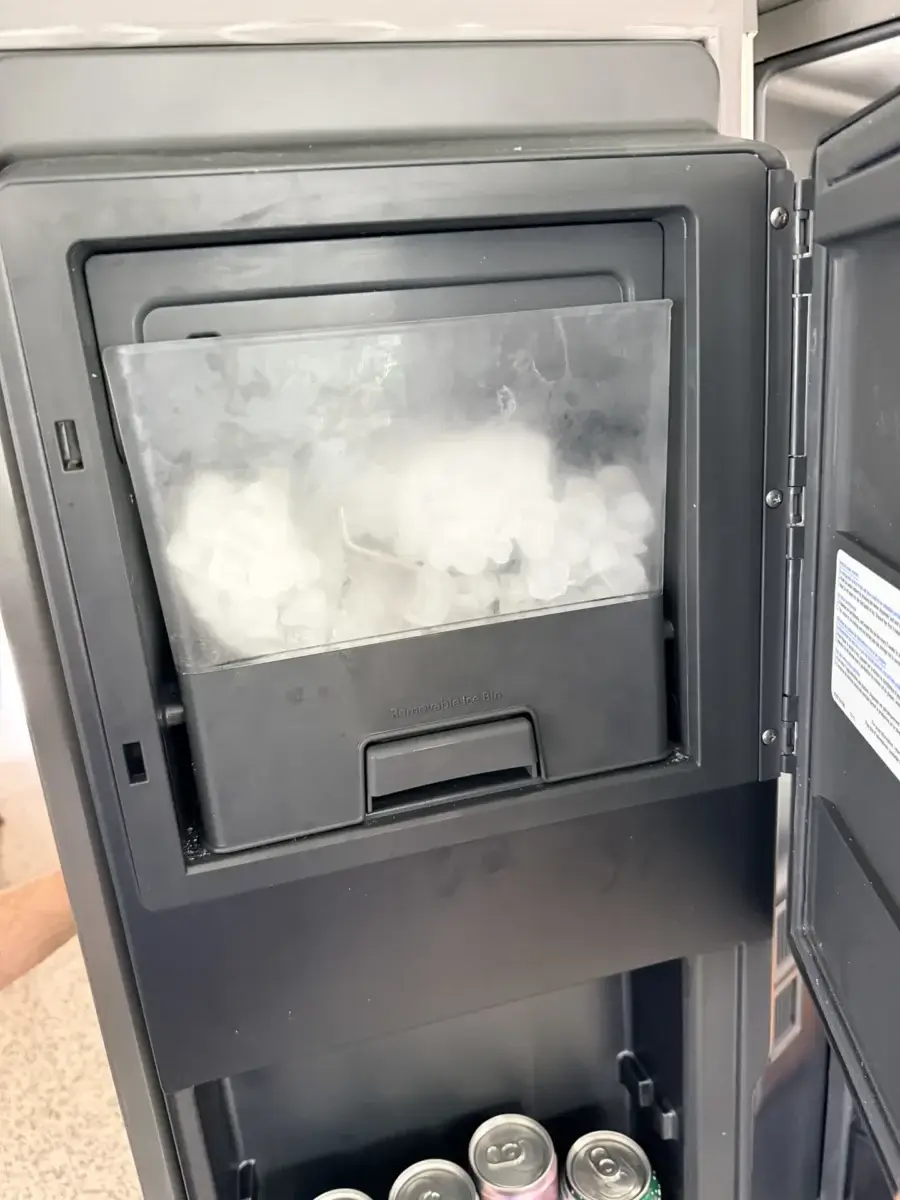
An automatic ice maker runs a simple loop. The water inlet valve opens for a few seconds and sends water through a small fill tube into the ice mould. The freezer cold freezes it. When the cubes reach temperature, a small heater briefly warms the mould, the ejector arm or motor rakes the cubes out into the bin, and the cycle repeats — as long as the shut-off arm (or, on newer fridges, an optical/infrared sensor) says the bin isn’t full.
That’s why “ice maker not working” almost always traces back to one of a small number of points along that loop: the on/off control (arm or switch), the freezer temperature, the water supply (line, pressure, filter, valve), the fill tube, or the ice maker module itself. Knowing the path turns a mystery into a checklist — which is exactly what the rest of this guide is.
One quick distinction first: a brand-new fridge (or a brand-new water line) can take up to 24 hours to produce its first batch of ice, and the first few batches can look cloudy or small. If you’ve only just installed or moved the unit, give it a full day before assuming anything is broken.
The complete causes of an ice maker not working, in likelihood order
Ranked by how often we actually find each one on GTA service calls. The first several are homeowner-checkable; the last few usually need a technician.
- Ice maker switched off, or the shut-off arm is up (most common) — the wire feeler arm gets bumped to the up/"off" position when you reach into the freezer, or the ice button/setting on the door display has been turned off. The unit reads "bin full" and simply stops.
- Freezer too warm — an ice maker needs the freezer holding around 0°F (-18°C). If the freezer drifts warmer — overpacked, a door left ajar, a worn door seal, or a cooling fault — the mould never freezes fast enough and ice production slows or stops.
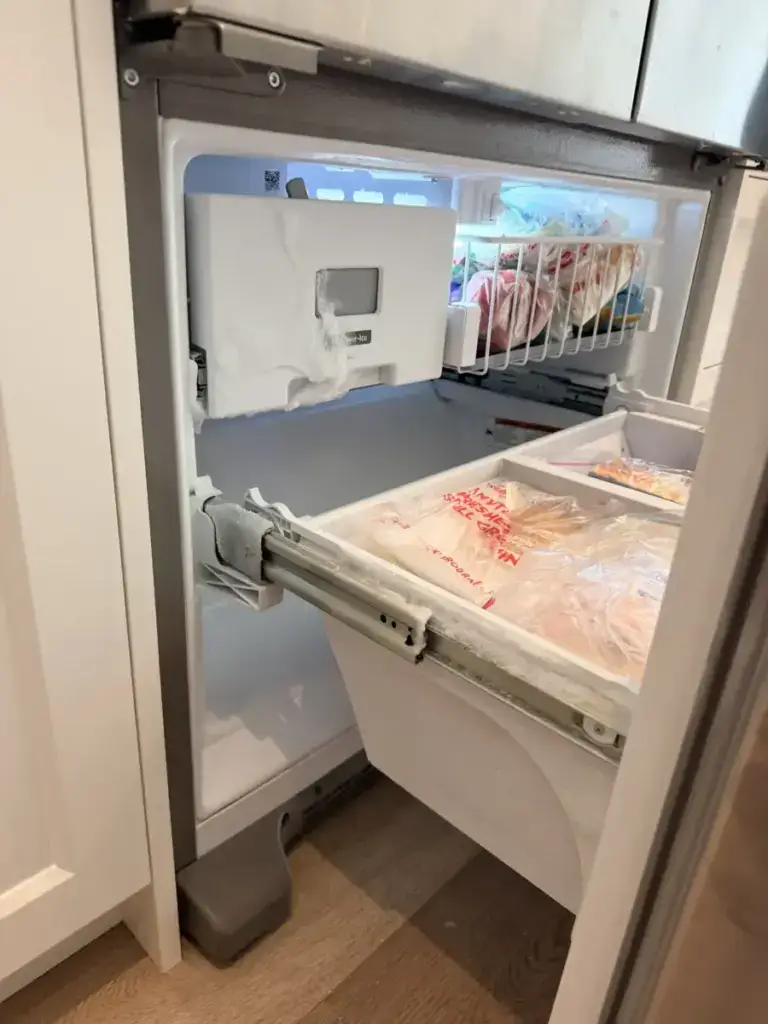
- Frozen fill tube — the small tube that feeds water into the mould can freeze solid, usually after a slow leak or a too-cold setting. Water can’t reach the tray, so no ice forms (and sometimes water dribbles and freezes into a sheet). A common, fixable cause.
- Clogged, kinked, or frozen water line — the supply line behind the fridge can kink, freeze, or clog (especially the saddle valve some homes still use). No water in means no ice out.
- Low household water pressure — fridge ice makers and dispensers generally need roughly 20–120 psi to fill correctly. Below that the valve won’t open fully, giving small/hollow cubes or none at all.
- Clogged or overdue water filter — a filter that’s months past due restricts flow enough to starve the ice maker. Many fridges expect a filter change about every six months.
- Failed water inlet valve — the electrically-operated valve that lets water into the fridge can fail open, closed, or partially. A partial failure gives weak fills; a full failure gives no ice. Technician repair.
- Failed ice maker module, motor, or sensor — the gear motor that ejects cubes, the module’s control, the thermostat, or the optical sensor on newer models can fail so the cycle never completes. Technician repair.
- Door not sealing / unit not level — a worn gasket or a fridge that isn’t level lets warm, humid air in, frosting the ice room and stalling production. Often shows alongside frost buildup.
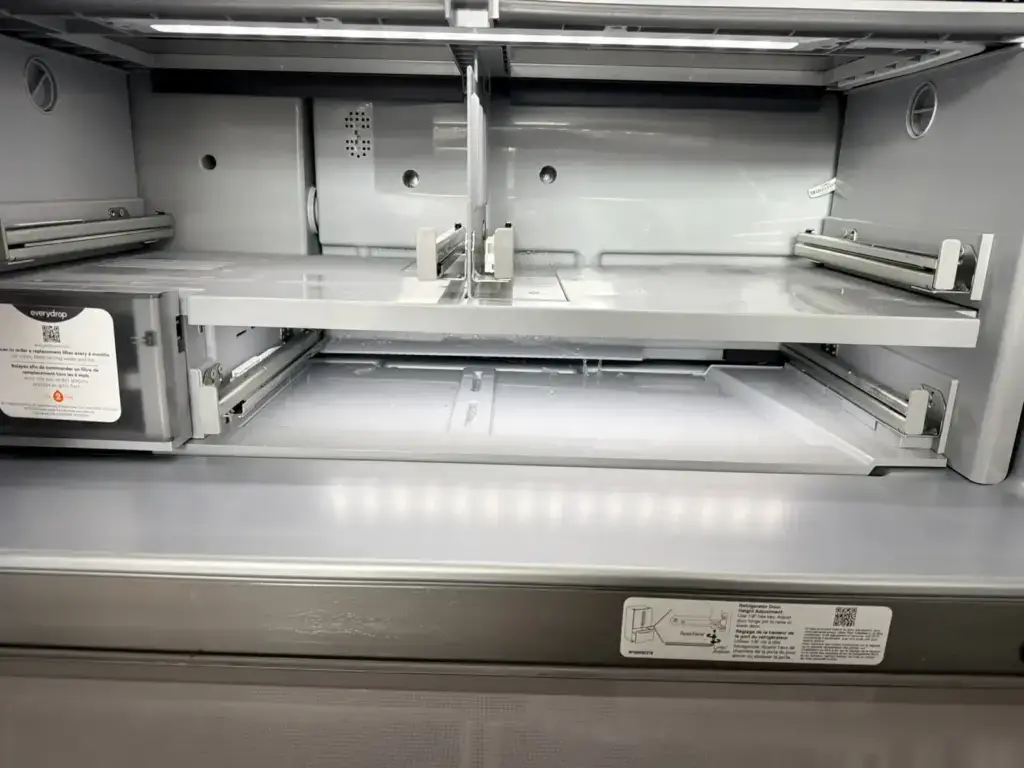
Safety first. Before you pull the fridge out, disconnect water lines, or reach into the ice room with a tool, unplug the refrigerator or shut it off at the breaker. You’ll be working near electrical components and a water connection. Never pry at a frozen ejector or sensor with a metal tool while the unit is powered.
The safe DIY checklist for an ice maker that won’t make ice
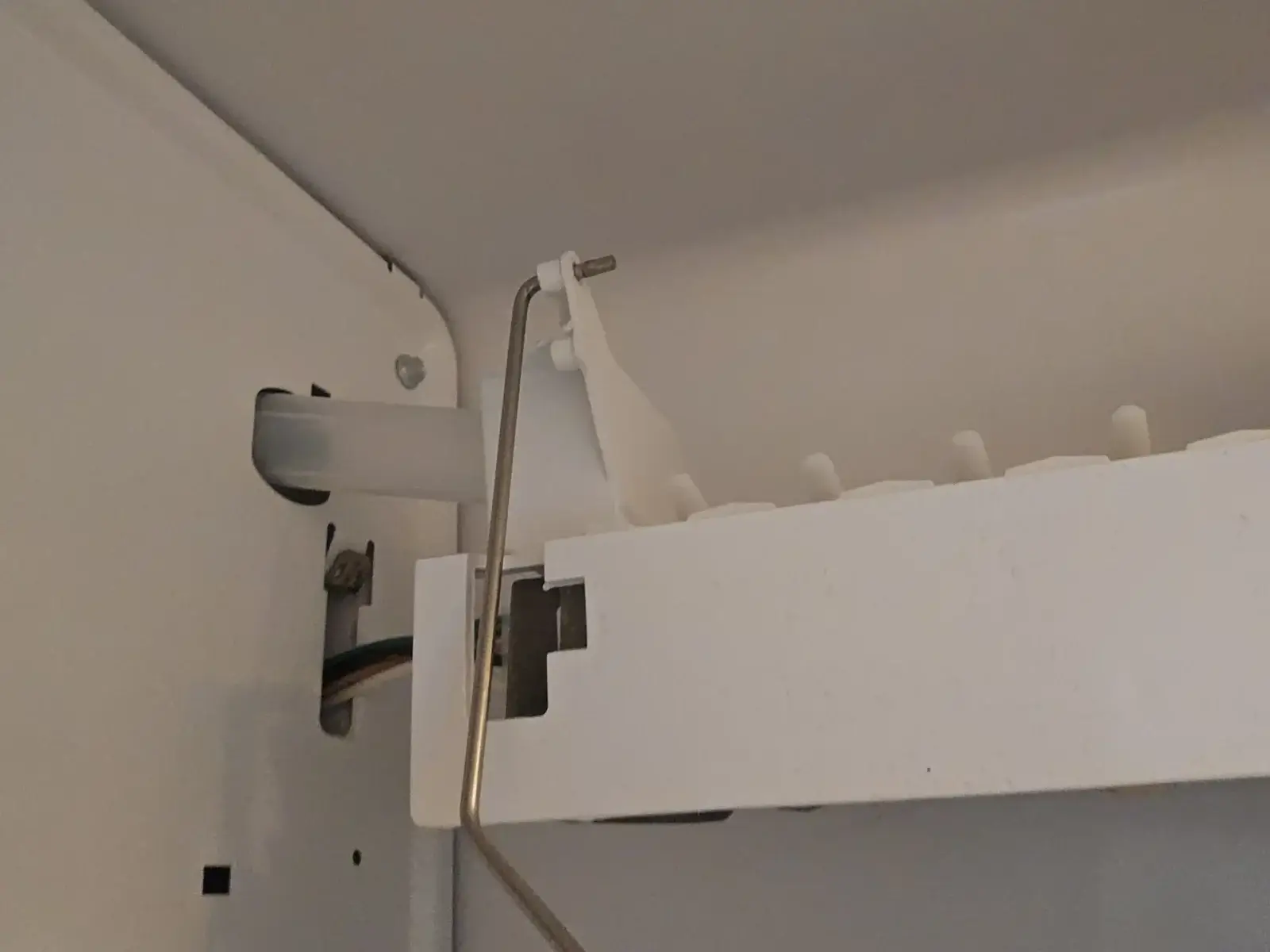
Work through these in order. Most no-ice problems are solved in the first four checks. You’ll need a flashlight, a towel, a hair dryer or warm water for thawing, and maybe a level. Plan on about 20–30 minutes (plus thaw/wait time).
- Confirm the ice maker is turned ON. Find the wire shut-off arm and make sure it’s in the down position — if it’s up, the unit thinks the bin is full and won’t run. On models with a power switch or a door-display setting, confirm "Ice" or "Ice Maker" is enabled. On optical-sensor models, make sure nothing (a bag, a box) is blocking the sensor’s line of sight inside the bin.
- Empty and inspect the bin. Pull the ice bin out. Clear any clumped or bridged ice and check the ejector for a stray cube jamming it. A frozen-together "ice bridge" is a frequent stall; break it up, dump it, and reseat the bin squarely so the arm or sensor reads correctly.
- Check the freezer temperature. The freezer should sit around 0°F (-18°C). If it’s warmer, the mould can’t freeze fast enough. Don’t overpack the freezer, keep vents clear, confirm the door closes fully, and give it a few hours to recover before judging the ice maker. A freezer that won’t get cold is a cooling problem — see our refrigerator not cooling guide.
- Check the water supply and filter. Confirm the water shut-off valve feeding the fridge is fully open. Test the door dispenser (if equipped) — if water also won’t dispense, the issue is upstream of the ice maker (line, pressure, valve, or filter). If your filter is months overdue, replace it with the correct cartridge and run a few litres through the dispenser to clear air.
- Thaw a frozen fill tube. Locate the small fill tube at the back of the ice maker where water enters the mould. If it’s iced over, unplug the fridge and thaw it gently with a hair dryer on low or a cloth soaked in warm water — never a sharp tool. Once clear, dry it and watch the next fill cycle to confirm water reaches the tray.
- Inspect the water line behind the fridge. Carefully pull the fridge out and check the supply line for kinks, crushing behind the cabinet, or a section frozen solid (common where the line runs cold). Straighten kinks, thaw frozen sections, and make sure any saddle/shut-off valve is fully open. Push the fridge back without re-pinching the line.
- Run a forced harvest / test cycle. Many ice makers have a manual test or "harvest" that cycles the motor and a fill so you can watch each stage. The procedure is brand- and model-specific (see the brand sections below); it’s the fastest way to tell a control/motor fault from a water-supply problem.
- Still no ice? It’s the valve, module, or sealed system — call a pro. If the unit is on, the freezer is cold, water reaches a dispenser, the fill tube and line are clear, and ice still won’t form, the failure is internal: a dead water inlet valve, a failed ice maker module/motor/sensor, or a sealed-system cooling fault. None of those is a safe DIY repair. Note your model number and call 647-834-4646.
Give it time before you judge it. A healthy ice maker only produces a few batches a day — roughly a couple of pounds of ice over 24 hours on most household models. After any fix (a thaw, a filter change, a temperature correction), wait a full day before deciding it’s still broken. And on a brand-new install, the first batch can take up to 24 hours and may look cloudy until the line clears.
Ice maker still dead after the arm, temperature, water, and fill tube all check out? That points to the water inlet valve, the ice maker module, or a cooling fault — internal repairs we handle same-day across the GTA. Our techs carry common inlet valves, ice maker assemblies, and parts on the truck and back every repair with a 90-day warranty on parts and labour. The $89 service call is applied to the repair if you go ahead.
Brand-specific ice maker guides
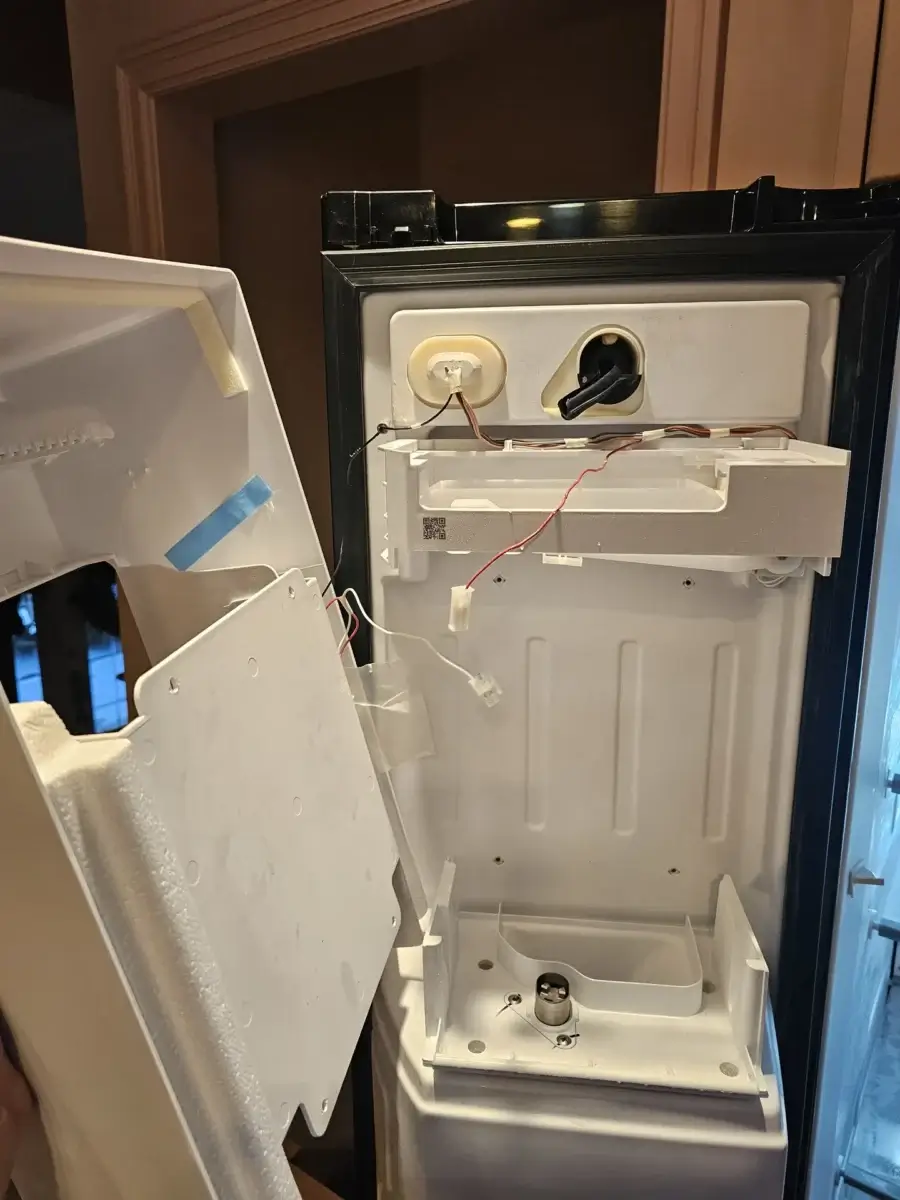
The ice-making loop is the same across brands, but each has model-specific quirks, reset routines, and a forced-test cycle worth knowing. Here’s what we see most often on the four brands people search for by name.
Samsung ice maker not working / not making ice
Samsung French-door fridges are the ones we get the most ice-room calls about. Two patterns dominate. First, ice-room frost buildup: warm air gets into the ice compartment (often via a worn gasket or a not-quite-closed door), frost forms around the ice maker and auger, and production stalls (closely related to a freezer icing up, which has the same warm-air-getting-in root cause). A full manual defrost of the ice room — unplugging the fridge and letting it thaw for several hours — is the usual reset, after fixing whatever let the warm air in. Second, many Samsung models have a forced "test" cycle (commonly reached by holding the ice maker’s test button until it chimes) that runs a full harvest so you can watch it fill and eject. Some Samsung models also display an ice-maker-related code (for example, a "22E" family fault tied to the ice maker fan/defrost) — if a code appears after you’ve cleared frost, it’s pointing at a component that needs a tech. Full Samsung appliance repair details are on our brand page, and if your Samsung is cooling unevenly see Samsung fridge not cooling but freezer works.
LG ice maker not working / not making ice
On LG fridges it’s important to separate a cooling problem from an ice problem. LG’s linear-compressor models are excellent at cooling, so if the fridge and freezer are cold but there’s no ice, the cause is almost always in the ice circuit (arm/sensor, fill tube, inlet valve, or the ice maker assembly) rather than the sealed system. Many LG ice makers have a test/reset button on the front of the assembly that triggers a harvest cycle — a clean way to confirm the motor and fill are working. Start with the on/off control and a fill-tube thaw, give a fresh filter and the correct temperature a full 24 hours, then run the test cycle. See our LG appliance repair page for what we service.
Frigidaire ice maker not working / not making ice
On Frigidaire (and the wider Electrolux family) the two parts we replace most for no-ice complaints are the water inlet valve and the ice maker auger/motor assembly. A failing inlet valve gives weak or no fills — you’ll often see small, hollow, or missing cubes — while a worn auger motor leaves ice in the bin but won’t dispense it. Before condemning either, confirm the unit is on, the freezer is at 0°F, and the fill tube and line are clear. If the dispenser still won’t deliver water either, the inlet valve or supply is the prime suspect. Our Frigidaire appliance repair page covers the models we service across the GTA.
Whirlpool / Kenmore ice maker not working / not making ice
Whirlpool builds ice makers for its own brand and for many Kenmore models, so the troubleshooting overlaps. The classic Whirlpool quirk is the optical / infrared sensor system: a pair of emitter/receiver "eyes" check whether the bin is full, and if they’re blocked by frost, a stray cube, or a misseated bin, the ice maker reads "full" and stops even when it’s empty. Clear the bin, wipe the sensor windows, and reseat everything squarely first. The other common Whirlpool repair is the ice maker module/motor itself. Many Whirlpool modules also support a manual test that cycles a harvest. See our Whirlpool appliance repair page for the models we cover.
For everything else, the refrigerator repair hub covers every brand we service across the GTA, York Region, and Simcoe County.
What does it cost to fix an ice maker that won’t work?
The honest answer is that it depends entirely on the cause — which is why a quick diagnostic matters before anyone quotes a part:
- On/off control, ice bridge, temperature, or filter — often a DIY fix (free), or a single $89 service call if you’d rather we handle it. No parts needed in most cases.
- Frozen fill tube or frozen/kinked line — usually a thaw and a line correction; minimal or no parts, anchored to the $89 service call.
- Water inlet valve replacement — a typical mid-range repair: parts plus labour, anchored to the $89 service call (applied to the repair).
- Ice maker module / motor / sensor — a common mid-range repair; the assembly is the main cost factor.
- Sealed-system / cooling fault — the most involved of the ice-related repairs; on an older fridge this is where a repair-vs-replace conversation makes sense, and we’ll give you an honest read.
Every quote we give includes parts, labour, the $89 service call (applied to the repair if you approve it on the spot — the final price depends on the diagnosis), and a 90-day warranty on parts and labour. Same-day service across the GTA, York Region, and Simcoe County. For a fuller breakdown of typical fridge repair pricing in our area, see our refrigerator repair cost guide for the GTA.
When to call an ice maker repair pro
Plenty of no-ice problems are genuinely DIY: turning the unit back on, dropping the shut-off arm, clearing an ice bridge, correcting the freezer temperature, replacing an overdue filter, or thawing a fill tube. Beyond those, here’s where a technician earns the visit:
- The unit is on, the freezer is cold, the fill tube and line are clear, and ice still won’t form — the inlet valve, module, motor, or sensor is the suspect, and replacing them isn’t a safe DIY job.
- Water won’t dispense from the door either, after the filter and supply are confirmed good — that points to the water inlet valve.
- The freezer won’t reach 0°F at all, or the fridge side is warm too — that’s a cooling/sealed-system fault, not just an ice problem.
- A persistent error code stays on the display after you’ve cleared frost and reset the ice room (for example a Samsung ice-maker fault).
- The ice room keeps frosting over within days of a defrost — that points to a failing gasket, defrost component, or seal that should be looked at promptly.
- You’re in Toronto, North York, Markham, Vaughan, Bradford, Barrie, or anywhere in our same-day GTA window — we’re out daily with parts on the truck.
Browse all our refrigerator repair services, or call 647-834-4646 for same-day help.
Ice maker not working — FAQ
Why did my ice maker suddenly stop making ice?
A sudden stop almost always traces to one of a few things. Most often the shut-off arm got bumped up or the ice setting was switched off, so the unit thinks the bin is full. Next most common is a freezer that drifted too warm, a frozen fill tube, or an overdue water filter restricting flow. Start by confirming the ice maker is on with the arm down, checking the freezer is near 0°F (-18°C), and testing whether water still dispenses from the door. If all of those are fine and there’s still no ice, the inlet valve or ice maker module may have failed and needs a technician.
How long does it take a new fridge to start making ice?
Up to 24 hours. A newly installed fridge (or a fridge that’s just had its water line connected) needs the freezer to reach full temperature and the water line to fill and purge before the first batch drops. The first few batches can look cloudy or small until the line clears, which is normal. Give it a full day before assuming the ice maker is faulty, and run a few litres through the door dispenser first to bleed air out of the line.
How do I reset my ice maker?
The reset varies by brand and model, but the general approach is the same. First, turn the ice maker off (lift the shut-off arm or switch it off at the display), then back on. If that doesn’t help, unplug the refrigerator for several minutes and plug it back in. Many ice makers also have a dedicated test or reset button on the front of the assembly that runs a full harvest cycle so you can watch it fill and eject — a quick way to confirm the motor and fill are working. After any reset, allow up to 24 hours for ice production to recover.
Why is my ice maker not getting water?
If no water reaches the ice maker, work upstream. Confirm the household shut-off valve feeding the fridge is fully open, then test the door dispenser — if water won’t come out there either, the problem is the supply line, water pressure, the filter, or the water inlet valve, not the ice maker itself. A clogged or months-overdue filter and low household water pressure (fridges generally want roughly 20–120 psi) are common culprits. A frozen fill tube will also stop water from reaching the mould even when the supply is fine.
Can a clogged water filter stop an ice maker from working?
Yes. A water filter that’s well past its replacement interval restricts flow enough to starve the ice maker and the door dispenser, giving small, hollow, or missing cubes. Most refrigerators expect a filter change roughly every six months. If your ice slowed down around the time the filter indicator came on, swap in the correct cartridge, run a few litres through the dispenser to clear air, and give it 24 hours to catch up.
Why is my ice maker making small or hollow cubes?
Small or hollow cubes mean the mould isn’t getting a full fill of water. The usual causes are a clogged or overdue water filter, low household water pressure, a partly kinked or frozen water line, or a water inlet valve that’s beginning to fail and no longer opens fully. Start with the filter and a check of the supply line and shut-off valve. If the filter is fresh, the line is clear, and pressure is normal but cubes are still undersized, the inlet valve is the likely culprit and is a technician repair.
My freezer is cold but the ice maker still won’t work — why?
A cold freezer with no ice tells you the cooling system is fine and the problem is in the ice circuit itself. Check, in order: the ice maker is switched on with the arm down, nothing is jamming the bin or ejector, the fill tube isn’t frozen, and water still dispenses from the door. If all of that checks out, the fault is usually the water inlet valve or the ice maker module/motor/sensor — components that need a technician to test and replace. This split (cold freezer, no ice) is especially common on LG and Whirlpool models.
Is it worth repairing an ice maker?
Usually yes. Many no-ice problems are free DIY fixes or a single service call, and even component repairs like a water inlet valve or ice maker module are typically mid-range and far cheaper than a new fridge. The repair-vs-replace conversation only really comes up when the fault is in the sealed cooling system on an older refrigerator. Our $89 diagnostic tells you exactly which it is, is applied to the repair if you go ahead, and every repair carries a 90-day warranty on parts and labour — the final price depends on the diagnosis.
Need an ice maker or fridge fixed in the GTA today?
Same-day refrigerator and ice maker repair across Toronto, North York, Markham, Vaughan, Bradford, Barrie, and all of York Region and Simcoe County. Our technicians arrive with common water inlet valves, ice maker assemblies, and parts on the truck, install OEM parts, and back every repair with a 90-day warranty on parts and labour. The $89 service call is applied to the repair — the final price depends on the diagnosis.
Brand-specific guides: Samsung appliance repair, LG appliance repair, Frigidaire appliance repair, and Whirlpool appliance repair. Also see refrigerator repair across the GTA and Samsung fridge not cooling but freezer works.
Book refrigerator repair online Or call 647-834-4646
What our GTA customers say
 Rating
Pleasant and quick service!

Very patient helpers and expert fixers

Mr Vlad got the job done! My dishwasher feels much better now! 5-star experience

I met Zaur today and it was genuinely a very pleasant experience working with him

Had the pleasure of having Zack and George come to address our appliance issue with the oven. They were both very friendly, greeted us accordingly, neat, clean and quick at fixing the issue. 5 star service!

Appliance repair was perfect

Zack was prompt, efficient, and replaced lights in our fridge. He checked that we were satisfied before he left. He tidied up and took all garbage and packaging.with him. I would recommend his service.

Thank you super service dryer was repaired today

Excellent service fast and and friendly . Pleasant service

Applianceforever has incredible quality! My refrigerator was promptly and expertly mended by them. Their services are highly recommended!

I had a fantastic experience with Zak and George from Appliance Forever. They fixed my dryer quickly and efficiently, and from start to finish they were professional, respectful, and knowledgeable. They were also very friendly and funny, which made the whole experience even better. It’s so nice to have service technicians who take pride in their work while treating their customers so well. I would highly recommend Zak and George:)

It was a great experience of having Zack to fix my dryer. I truly recommend it to everyone to use this service.

Zack fixed an issue with our Microwave oven which caused it to randomly lose power.

Thank you George for being so professional, timely and efficient while repairing my freezer. Job well done.

My washer was broken, and they came out really quickly. They worked fast and fixed the problem with no hassle. Great service!